
O&M
-
 O&M
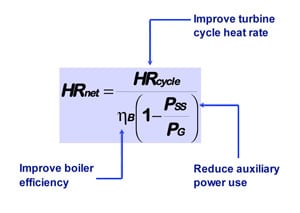
O&MPower 101: Improving the Performance of Boiler Auxiliaries, Part III
Efficient boiler operation requires boiler auxiliary equipment to operate in harmony. In this third and last installment of our Power 101 series, we examine ways to decrease the auxiliary power requirements of boiler auxiliaries.
-
O&M
Predictive Maintenance That Works, Part I
This year’s series will focus on predictive maintenance (PdM), also known as condition-based maintenance.
-
O&M
Plan for the Worst: Insurance Insights
Imagine this scenario: Two separate power plants experience a bowing problem greater than 18 mils with a steam-turbine rotor. The turbines are from the same manufacturer and several repair options are reviewed. Management at both plants selects an innovative approach involving removal of a substantial amount of material, which is replaced with weld overlay and then machined to correct diameters and centerline of the balance piston area. One plant’s insurance company covers the repair, the other plant’s doesn’t. Why?
-
 O&M
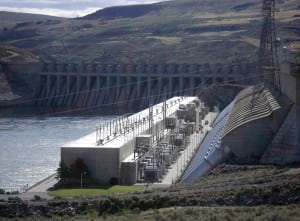
O&MFire Protection Options for Air-Cooled Hydroelectric Generators
Fire protection systems for air-cooled hydroelectric generators have several special requirements due to these generators’ unique geometries. This survey of options will help plant owners and operators make the best equipment selections for their plants and thereby avoid unexpected surprises.
-
 O&M
O&MThe Heat Is On at Arctic Air Base
Thule (“Two Lee”) Air Base is a 254–square mile base located in a coastal valley in the northwestern corner of Greenland, within the Arctic Circle. The base, the U.S.’s northernmost military installation, is nestled between mountains and surrounded by icebergs and glaciers as far as the eye can see.
-
 O&M
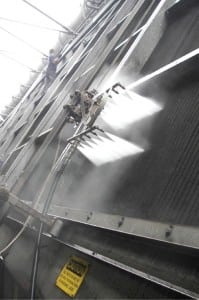
O&MImprove ACC Performance with Automated Pressure Washing
Beginning each spring and continuing through the fall, backpressure readings at Rosebud Operating Services Inc. indicated substantial drops in the condenser’s efficiency. Increased backpressure results in higher net plant heat rate and a corresponding measurable decrease in power generation.
-
 O&M
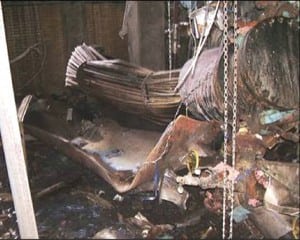
O&MPlant Safety: Learn from the Mistakes of Others
On January 27, the U.S. Chemical Safety Board (CSB) released a case study examining the causes of a heat exchanger rupture and ammonia release at the Goodyear Tire and Rubber Plant in Houston in 2008. Use these lessons learned to check your employee tracking system and to determine whether your plant has installed valves that […]
-
 O&M
O&MTECO’s San José Plant Models Safe and Sustainable Practices
In operation since 2000, TECO Energy Inc.’s 132-MW San José Power Station was the first coal-fired power plant built in Central America and is still the largest one. Used as a baseload plant, the facility successfully combines high availability with a business model that promotes sustainable environmental practices and a safe workplace.
-
 O&M
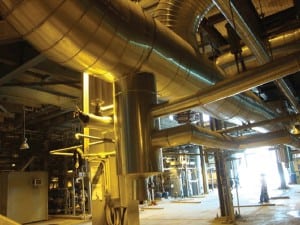
O&MProper Sizing of Steam Header Drains Prevents Water Induction
Steam turbines convert the thermal energy in motive steam to rotating mechanical energy, and the generator converts that energy into electrical power. One important requirement for safe and reliable operation is preventing water induction in the steam turbine and avoiding water hammer in the steam piping system. ASME standards present the design guidelines for removing moisture from steam lines; this article explains a practical design process.
-
 O&M
O&MNew Tools for Diagnosing and Troubleshooting Power Plant Equipment Faults
The Electric Power Research Institute has developed a pair of diagnostic tools that combine and integrate features from multiple sources of plant information. The Diagnostic Advisor and the Asset Fault Signature Database will improve diagnostics for and troubleshooting of equipment faults by providing a holistic view of the condition of plant equipment.
-
 O&M
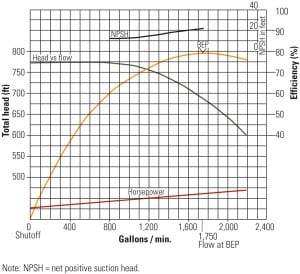
O&MDeferred Maintenance Increases Pump Failures
If your facility has recently seen an upsurge in bearing failures on boiler feedwater (BFW) pumps, you are not the only plant experiencing these unnecessary and costly failures. The failure causes are often elusive, which is why plants have so many unresolved repeat failures.
-
O&M
Power 101: Improving the Performance of Boiler Auxiliaries, Part II
Efficient boiler operation requires boiler auxiliary equipment to operate in harmony. The air preheater, for example, though it has few moving parts, is vital to maintaining efficient boiler performance. In this second installment of our Power 101 series, we examine performance degradation caused by corrosion and fouling of the air preheater that results from the combustion of coal plus the effects of ammonia and sodium bisulfite injection for SO3 mitigation.
-
 O&M
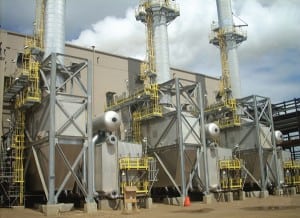
O&MDesigning Large Package Boilers
Designing large package boilers rated at over 400,000 lb/h steam production is a challenge because of shipping limitations within the U.S. and Canada.
-
 O&M
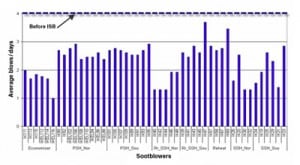
O&MClinker Minimization at San Miguel Electric Co-Op
San Miguel Electric Cooperative selected and installed an automatic sootblowing system for its Unit 1 to minimize clinkers in the boiler that caused semi-annual unscheduled outages. New boiler surface-cleaning equipment and intelligent cleaning software eliminated these expensive outages.
-
 O&M
O&MIncreasing Generation Ramp Rate at Morgantown Generating Station’s Coal-Fired Units
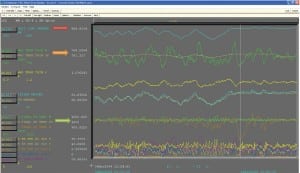
At Morgantown Generating Station, plant personnel used innovative methods to combine model predictive control with distributed control system–based process control algorithms to improve waterwall temperature control and main steam temperature control and to enhance unit ramp rate capability. The previous heat rate and NOx optimization performance gains were retained. Focusing beyond basic loops of feedwater, air, and O2, the project considered issues such as PID controller override configuration and limitations. The techniques used to overcome these challenges improved unit ramp rate capability beyond any previous unit performance.
-
 O&M
O&MContinuous SO3 Monitoring Can Reduce Sorbent Consumption
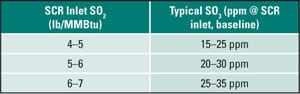
An unintended consequence of employing selective catalytic reduction and wet flue gas desulfurization to reduce nitrogen oxide and sulfur dioxide levels at coal-fired power plants has been unwanted sulfur trioxide (SO3) emissions. Picking the right sorbent in the right amount can eliminate that problem.
-
 O&M
O&MExelon Enjoys Benefits of Online Transformer Monitoring
In all of these cases, frequent oil analysis monitoring and preestablished action plans were able to allow for transformer replacement before the occurrence of a catastrophic failure. Exelon’s experience, as well as that of other power utilities across the grid, has spawned a report by the Institute of Nuclear Power Operations (INPO) of Atlanta, Georgia, that recommends that performance monitoring and trending be applied to all large transformers in order to establish a baseline for transformer maintenance strategies.
-
 O&M
O&MSelecting a Specialty Accumulator
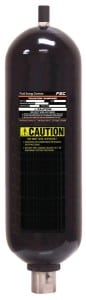
Sudden bumps and shocks are great fun when you are off-roading or are riding on a rollercoaster. But when you are operating a piece of equipment, you want it to be running as smoothly as a Cadillac rolling down the interstate. Sudden changes in pressure produce vibration, cavitation, and water hammer and generally lower the lifespan and reliability of fluid systems.
-
 O&M
O&MEPRI Identifies Four Breakthrough Technologies for 2011
The Electric Power Research Institute (EPRI) has identified four breakthrough technologies and funded them through its Strategic Research and Development Portfolio. EPRI expects to accelerate development of these innovations because they are likely to have significant effects on how electricity is generated and delivered.
-
 O&M
O&MKeeping Condensers Clean
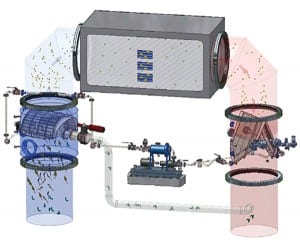
The quality of the cooling water intake and the amount of debris in that water affects the operation and performance of the condenser and therefore the thermal performance of the typical steam plant.
-
 O&M
O&MExpanding the Use of Predictive Maintenance as a Business Strategy
The Linde Group is a world-leading gases and engineering company operating in more than 100 countries. It’s no surprise that the company uses a variety of advanced monitoring techniques and equipment to keep its plants operating reliably. In the U.S. and UK particularly, Linde plants have used online machine condition monitoring for a number of years. At its Shanghai headquarters, Linde has formed a large and impressive remote operations center where it monitors and tracks the process operations of all its major gas plants in China 24 hours a day.
-
 O&M
O&MPower 101: Improving the Performance of Boiler Auxiliaries, Part I
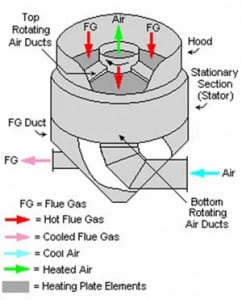
Boiler auxiliary equipment often receives no respect for the role it plays in maintaining efficient boiler performance. In this second installment of our Power 101 series, we examine the design and performance of the air preheater.
-
 O&M
O&MFlue Gas Analysis as a Furnace Diagnostic Tool
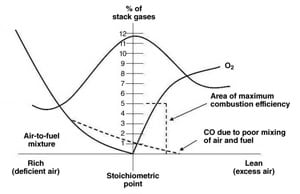
Combustion flue gas analysis has been used to optimize the boiler air/fuel ratio for decades. Measuring the amount of excess oxygen and/or carbon monoxide in combustion flue gases gives an indication of boiler efficiency and, thereby, plant operating economics. New sensors make those measurements simple and accurate.
-
 O&M
O&MCSB Releases Hot Work Safety Notice
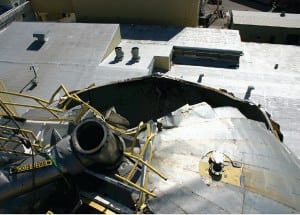
The Chemical Safety Board (CSB)—an independent federal agency charged with investigating serious chemical accidents such as equipment failure, as well as inadequacies in regulations, industry standards, and safety management systems—recently released multiple reports that should be made part of every power plant’s safety training program.
-
O&M
NFPA Gas Purging Rules Updated
The CSB has made urgent recommendations to the NFPA and the International Code Council to prohibit indoor purging and require companies and installers to purge flammable fuel gases to safe locations outdoors, away from workers and ignition sources.
-
 O&M
O&MAbrasion-Resistant Pipe Handles Ash Slurry
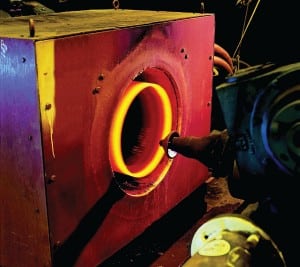
Steel piping systems are widely used at coal-fired power plants for a variety of purposes, including the conveying of coal ash slurry to nearby settling ponds, the transfer of limestone slurry to absorber spray towers for removal of SO2 and dilute hydrochloric acid from flue gases, and for transporting away the calcium sulfate by-product of the flue gas desulfurization process.
-
 O&M
O&MAir Casters Speed Equipment Moves
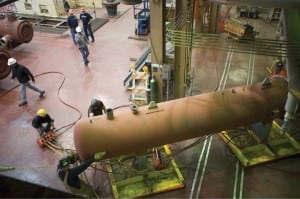
When it comes to moving megaton items like feedwater heaters or recirculating pumps, conventional moving tools such as wheel rollers, cranes, hoists, and come-alongs may be virtually useless. In some cases, moving large components is dangerous in a space-constrained location surrounded by delicate process control equipment. Feedwater heater and recirculating pump removal and replacement are […]
-
 O&M
O&MRetrofitting BWR Recirculation Pumps with Adjustable-Speed Drives
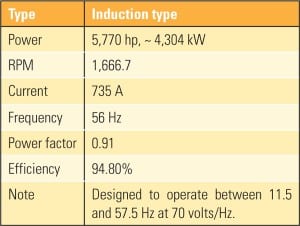
Exelon Nuclear recently replaced the original motor-generator sets for its boiling water reactor (BWR) recirculation pumps at its Quad Cities Generating Station Unit 1 with adjustable-speed drives. We examine the actual energy savings, motor-starting characteristics, control accuracy and stability, and motor and cable thermal behavior of this retrofit project.
-
 O&M
O&MPulverized Coal Pipe Testing and Balancing
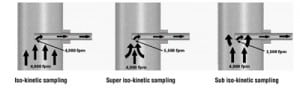
If you want the most accurate test results, it’s worth the extra effort to take isokinetic coal samples from coal pipes when collecting fuel and air measurements. Together, the data collected will allow more accurate balancing of coal pipes, measure fuel fineness, and improve the combustion efficiency of your steam generator.
-
 O&M
O&MAir Preheater Seal Upgrades Renew Plant Efficiency
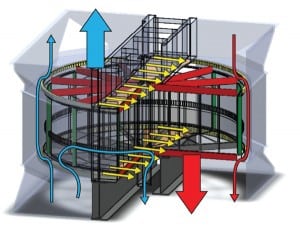
The air preheater is a critical, yet often overlooked, component of the boiler combustion air system. Evaluating and optimizing a heater’s performance is difficult given how entwined it is with the entire combustion system and the lack of standardized calculation tools. Reducing leakage by using modern seal technology will improve combustion efficiency, maintain fan performance, and keep your downstream air quality control equipment operating within spec.